
WELCOME TO THE #1 WEBSITE TO DEAL WITH YOUR CALIFORNIA TRAFFIC TICKETS






We do not require for you to appear in a trial de nova (court trial) to get our back guarantee. Even if the ticket is reduced but not dismissed we still honor our money back guarantee.
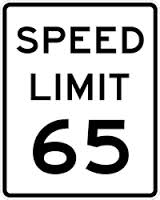 Speeding tickets are the most common type of tickets issued by all law enforcement agencies for moving violations. As a result, over the years there have been many books, booklets and websites published to try to explain various strategies to beat a speeding ticket in court. To successfully contest a speed ticket you would need an in-depth knowledge of the policies and procedures of law enforcement agencies with respect to speed enforcement as well as other critical factors such as; operating requirements and limitations of the use of radar, lidar or laser devices which are used to measure the speed of a target vehicle.
We listed various information regarding speeding tickets that would help you increase the chances of dismissing a speeding ticket. We can help prepare all the necessary documents for your trial by written declaration based on information provided to us by you. If you have decided to use our service, just complete our online sign up form and send us a copy of your traffic ticket. We will prepare all your documents for you and send you the final documents. All you need to do is to print, review sign and mail to the court. It's that simple.
The most common vehcile code violations in California are violations of cvc 22349 a or cvc 22349 b followed by cvc 22350 cvc 22356 b and for commercial vehicles or vehicles with trailers cvc 22406 a and cvc 22407. To successfully fight speeding tickets for speed violations of VC 22349 a VC 22349 b VC 22350 VC 22348 VC 22356 VC 22406 and VC 22407 a detailed knowledge of the California vehicle code, operating procedures and standards as well as speed radar, lidar and laser operation are an absolute must.
It is important to stress that every speeding ticket is unique. Therefore, to fight two speeding tickets for the same violation code may require completely different defense arguments.
That is where the experience and in depth knowledge about speeding tickets can make the difference between beating the speeding ticket or not. Please note if speeding ticket defenses were simple and could be explained in a simple manner, there would be many handbooks to exactly teach individuals how to beat speeding tickets. Unfortunately, the subject of contesting speeding tickets is not that simple.
Violation of VC 22350 is subject to the California speed trap rules. Therefore, a speed trap defense for VC 22350 may work for this type of speeding tickets.
Violations of California Vehicle Code Sections VC 22348 b, VC 22349 a, VC 22349 b or VC 22356 b VC 22406 a VC 22407 are not subject to the California speed trap arguments. Therefore, using a California speed trap defense will not help you get out of a speeding ticket. The only way to fight speeding tickets for these violation codes is to examine the way the Officer collected the speeding ticket evidence against the river. Therefore, complete familiarity of the use of speed RADR, speed LIDAR or LASER or speed detection by pacing is necessary. In our opinion the best experts to review and analyze the information to prepare a speeding ticket defense and fight these types of speeding tickets are retired California Highway Patrol or local City Police or County Sheriff Officers. Also, electrical engineers with complete knowledge of speed radar, speed lidar or speed laser operation can prepare a solid speeding ticket defense.
A common mistake most people make when they prepare their own speeding ticket defense in fighting these types of speeding tickets in court is self incrimination. For example, if you were issued a speeding ticket for driving 80 mph in 65 mph zone and you show up in traffic court and tell the judge you were not driving 80 mph but you were only going 70 mph, well you have just admitted that you are guilty of exceeding the maximum speed limit of 65 mph. The only issue is to reduce your speeding ticket from 80 mph to 70 mph. However, the Judge is not just going to reduce your speeding ticket just because you say you were going 70 mph and most likely after you say that you were driving at 70 mph the Judge is going to interrupt you and say “guilty next”.
Or, if your speeding ticket defense is that everyone was driving at 70 mph but you were the only one that was pulled over for a speeding ticket, again you are guilty since the Officer could not possibly be expected to stop every single speeding violator. So, the first thing is not to self incriminate.
Second, just showing up in traffic court and claiming that the Officer’s speed radar detected the speed of some other car and not your speed, is not going to work well either. If you are claiming error by the officer or the speed radar, you must present convincing argument in court to create reasonable doubt. Therefore, you must look at the condition and the exact location of the roadway, weather, day or night, line of sight, vertical and horizontal curves in the roadway and exactly where the alleged speeding violation occurred. You should also know exactly what speed detection device was used (Radar or Lidar or Laser) with the model numbers. You must know speeding tickets secrets and the detailed operational requirements and the margin of error in using each of the devices available to the California Highway Patrol or the local City and County Sheriff Police Departments. Each speed detection device will have a different argument taking into account the following:
1-The specific location where the alleged speeding violation occurred
2-The conditions of the roadway
3-Specific type and model number of the speed detection radar, lidar or laser
4-The specific speed detection unit that was used to issue the specific speeding ticket to you
5-Was the speed detection device used in moving mode or stationary
6-Was the officer facing the target vehicle moving in the same or opposite direction
7-If airplane was used to detect the speed
8-Was the speed detected by pacing
As you can see there are multiple variations of possible arguments that an individual MUST be familiar with to know exactly where the possible mistakes were made and be able to explain the issues in a clear and concise manner to the Judge to get the speeding ticket dismissed. Remember speeding ticket excuses do not dismiss speeding tickets.
101 Freeway Speeding Tickets
I-5 Freeway Speeding Tickets
Speeding Ticket Cost for VC 22349
Speeding ticket Cost for VC 22356
CHP Speeding Tickets
The following are the speed related California Vehicle Code sections for speeding tickets:
22348 a Notwithstanding subdivision (b) of Section 22351, a person shall not drive a vehicle upon a highway with a speed limit established pursuant to Section 22349 or 22356 at a speed greater than that speed limit.
22348 b A person who drives a vehicle upon a highway at a speed greater than 100 miles per hour is guilty of an infraction punishable, as follows:
(1) Upon a first conviction of a violation of this subdivision, by a fine of not to exceed five hundred dollars ($500). The court may also suspend the privilege of the person to operate a motor vehicle for a period not to exceed 30 days pursuant to Section 13200.5.
(2) Upon a conviction under this subdivision of an offense that occurred within three years of a prior offense resulting in a conviction of an offense under this subdivision, by a fine of not to exceed seven hundred fifty dollars ($750). The person's privilege to operate a motor vehicle shall be suspended by the Department of Motor Vehicles pursuant to subdivision (a) of Section 13355.
(3) Upon a conviction under this subdivision of an offense that occurred within five years of two or more prior offenses resulting in convictions of offenses under this subdivision, by a fine of not to exceed one thousand dollars ($1,000). The person's privilege to operate a motor vehicle shall be suspended by the Department of Motor Vehicles pursuant to subdivision (b) of Section 13355.
(c) A vehicle subject to Section 22406 shall be driven in a lane designated pursuant to
Section 21655, or if a lane has not been so designated, in the right-hand lane for traffic or as close as practicable to the right-hand edge or curb. When overtaking and passing another vehicle proceeding in the same direction, the driver shall use either the designated lane, the lane to the immediate left of the right-hand lane, or the right-hand lane for traffic as permitted under this code. If, however, fight speeding tickets specific lane or lanes have not been designated on a divided highway having four or more clearly marked lanes for traffic in one direction, a vehicle may also be driven in the lane to the immediate left of the right-hand lane, unless otherwise prohibited under this code. This subdivision does not apply to a driver who is preparing for a left- or right-hand turn or who is in the process of entering into or exiting from a highway or to a driver who is required necessarily to drive in a lane other than the right-hand lane to continue on his or her intended route.
22349 a Except as provided in Section 22356, no person may drive a vehicle upon a highway at a speed greater than 65 miles per hour.
22349 b Notwithstanding any other provision of law, no person may drive a vehicle upon a two-lane, undivided highway at a speed greater than 55 miles per hour unless that highway, or portion thereof, has been posted for a higher speed by the Department of Transportation or appropriate local agency upon the basis of an engineering and traffic survey. For purposes of this subdivision, the following apply:
(1) A two-lane, undivided highway is a highway with not more than one through lane of travel in each direction.
(2) Passing lanes may not be considered when determining the number of through lanes.
(c) It is the intent of the Legislature that there be reasonable signing on affected two-lane, undivided highways described in subdivision (b) in continuing the 55 miles-per-hour speed limit, including placing signs at county boundaries to the extent possible, and at other appropriate locations.
Speed Trap Rules apply to speeding violations of 22350
22350 No person shall drive a vehicle upon a highway at a speed greater than is reasonable or prudent having due regard for weather, visibility, the traffic on, and the surface and width of, the highway, and in no event at a speed which endangers the safety of persons or property.
22351 (a) The speed of any vehicle upon a highway not in excess of the limits specified in Section 22352 or established as authorized in this code is lawful unless clearly proved to be in violation of the basic speed law.
(b) The speeding of any vehicle upon a highway in excess of the prima facie speeding limits in Section 22352 or established as authorized in this code is prima facie unlawful unless the defendant establishes by competent evidence that the speeding in excess of said limits did not constitute a violation of the basic speeding law at the time, place and under the conditions then existing.
22352 (a) The prima facie limits are as follows and shall be applicable unless changed as authorized in this code and, if so changed, only when signs have been erected giving notice thereof:
(1) Fifteen miles per hour:
(A) When traversing a railway grade crossing, if during the last 100 feet of the approach to the crossing the driver does not have a clear and unobstructed view of the crossing and of any traffic on the railway for a distance of 400 feet in both directions along the railway. This subdivision does not apply in the case of any railway grade crossing where a human flagman is on duty or a clearly visible electrical or mechanical railway crossing signal device is installed but does not then indicate the immediate approach of a railway train or car.
(B) When traversing any intersection of highways if during the last 100 feet of the driver's approach to the intersection the driver does not have a clear and unobstructed view of the intersection and of any traffic upon all of the highways entering the intersection for a distance of 100 feet along all those highways, except at an intersection protected by stop signs or yield right-of-way signs or controlled by official traffic control signals.
(C) On any alley.
(2) Twenty-five miles per hour:
(A) On any highway other than a state highway, in any business or residence district unless a different speed is determined by local authority under procedures set forth in this code.
(B) When approaching or passing a school building or the grounds thereof, contiguous to a highway and posted with a standard "SCHOOL" warning sign, while children are going to or leaving the school either during school hours or during the noon recess period. The prima facie limit shall also apply when approaching or passing any school grounds which are not separated from the highway by a fence, gate, or other physical barrier while the grounds are in use by children and the highway is posted with a standard "SCHOOL" warning sign. For purposes of this subparagraph, standard "SCHOOL" warning signs may be placed at any distance up to 500 feet away from school grounds.
(C) When passing a senior center or other facility primarily used by senior citizens,
contiguous to a street other than a state highway and posted with a standard "SENIOR"
warning sign. A local authority is not required to erect any sign pursuant to this paragraph until donations from private sources covering those costs are received and the local agency makes a determination that the proposed signing should be implemented. A local authority may, however, utilize any other funds available to it to pay for the erection of those signs.
(b) This section shall become operative on March 1, 2001.
22353 When conducting an engineering and traffic survey, the City of Norco, in addition to the factors set forth in Section 627, may also consider equestrian safety.
22354 (a) Whenever the Department of Transportation determines upon the basis of an engineering and traffic survey that the limit of 65 miles per hour is more than is reasonable or safe upon any portion of a state highway where the limit of fight speeding tickets 65 miles is applicable, the department may determine and declare a prima facie speeding limit of 60, 55, 50, 45, 40, 35, 30 or 25 miles per hour, fight speeding tickets whichever is found most appropriate to facilitate the orderly movement of traffic and is reasonable and safe, which declared prima facie speeding limit shall be effective when appropriate signs giving notice thereof are erected upon the highway.
(b) This section shall become operative on the date specified in subdivision (c) of Section 22366.
22354.5 (a) Whenever the Department of Transportation determines, upon the basis of an engineering and traffic survey, to fight speeding tickets increase or decrease the existing speeding limit on a particular portion of a state highway pursuant to Section 22354, it shall, prior to increasing or decreasing that speed limit, consult with, and take into consideration the recommendations of, the Department of the California Highway Patrol.
(b) The city council or board of supervisors of a city or county through which any portion of a state highway subject to subdivision (a) extends may conduct a public hearing on the proposed increase or decrease at a convenient location as near as possible to that portion of state highway. The Department of Transportation shall take into consideration the results of the public hearing in determining whether to increase or decrease the speeding limit.
22355 Whenever the Department of Transportation determines upon the basis of an
engineering and traffic survey that the safe and orderly movement of traffic upon any state highway which is a freeway will be facilitated by the establishment of variable speed limits, the department may erect, regulate, and control signs upon the state highway which is a freeway, or any portion thereof, which signs shall be so designed as to permit display of different speeding limits at various times of the day or night. Such signs need not conform to the standards and specifications established by regulations of the Department of Transportation pursuant to Section 21400, but shall be of sufficient size and clarity to give adequate notice of the applicable speeding limit. The speeding limit upon the freeway at a particular time and place shall be that which is then and there displayed upon such sign.
22356 (a) Whenever the Department of Transportation, after consultation with the
Department of the California Highway Patrol, determines upon the basis of an engineering and traffic survey on existing highway segments, or upon the basis of appropriate design standards and projected traffic volumes in the case of newly constructed highway segments, that a speeding greater than 65 miles per hour would facilitate the orderly movement of vehicular traffic and would be reasonable and safe upon any state highway, or portion thereof, that is otherwise subject to a maximum speeding limit of 65 miles per hour, the Department of Transportation, with the approval of the Department of the California Highway Patrol, may declare a higher maximum speeding of 70 miles per hour for vehicles not subject to Section 22406, and shall cause appropriate signs to be erected giving notice thereof. The Department of Transportation shall only make a determination under this section that is fully consistent with, and in full compliance with, federal law.
22356 b No person shall drive a vehicle upon that highway at a speeding greater than 70 miles per hour, as posted.
(c) This section shall become operative on the date specified in subdivision (c) of Section 22366.
22357 (a) Whenever a local authority determines upon the basis of an engineering and
traffic survey that a speeding greater than 25 miles per hour would facilitate the orderly
movement of vehicular traffic and would be reasonable and safe upon any street other than a state highway otherwise subject to a prima facie limit of 25 miles per hour, the local authority may by ordinance determine and declare a prima facie speeding limit of 30, 35, 40, 45, 50, 55, or 60 miles per hour or a maximum speed limit of 65 miles per hour, whichever is found most appropriate to facilitate the orderly movement of traffic and is reasonable and safe. The declared prima facie or maximum speeding limit shall be effective when appropriate signs giving notice thereof are erected upon the street and shall not thereafter be revised except upon the basis of an engineering and traffic survey.
This section does not apply to any 25-mile-per-hour prima facie limit which is applicable
when passing a school building or the grounds thereof or when passing a senior center or other facility primarily used by senior citizens.
(b) This section shall become operative on the date specified in subdivision (c) of Section 22366.
22357.1 Notwithstanding Section 22357, a local authority may, by ordinance or resolution, set a prima facie speeding limit of 25 miles per hour on any street, other than a state highway, adjacent to any children's playground in a public park but only during particular hours or days when children are expected to use the facilities. The 25 mile per hour speeding limit shall be effective when signs giving notice of the speeding limit are posted.
22358 (a) Whenever a local authority determines upon the basis of an engineering and
traffic survey that the limit of 65 miles per hour is more than is reasonable or safe upon any portion of any fight speeding tickets street other than a state highway where the limit of 65 miles per hour is applicable, the local authority may by ordinance determine and declare a prima facie speeding limit of 60, 55, 50, 45, 40, 35, 30, or 25 miles per hour, whichever is found most appropriate to facilitate the orderly movement of traffic and is reasonable and safe, which declared prima facie limit shall be effective when appropriate signs giving notice thereof are erected upon the street.
(b) This section shall become operative on the date specified in subdivision (c) of Section 22366.
22358.3 Whenever a local authority determines upon the basis of an engineering and traffic survey that the prima facie speeding limit of 25 miles per hour in a business or residence district or in a public park on any street having a roadway not exceeding 25 feet in width, other than a state highway, is more fight speeding tickets than is reasonable or safe, the local authority may, by ordinance or resolution, determine and declare a prima facie speeding limit of 20 or 15 miles per hour, whichever is found most appropriate and is reasonable and safe. The declared prima facie limit shall be effective when appropriate signs giving notice thereof are erected upon the street.
22358.4. (a) (1) Whenever a local authority determines upon the basis of an engineering and traffic survey that the prima facie speeding limit of 25 miles per hour established by paragraph (2) of subdivision (a) of Section 22352 is more than is reasonable or safe, the local authority may, by ordinance or resolution, determine and declare a prima facie speeding limit of 20 or 15 miles per hour, whichever is justified as the appropriate speed limit by that survey.
(2) An ordinance or resolution adopted under paragraph (1) shall not be effective until appropriate signs giving notice of the speeding limit are erected upon the highway and, in the case of a state highway, until the ordinance is approved by the Department of Transportation and the appropriate signs are erected upon the highway.
(b) (1) Notwithstanding subdivision (a) or any other provision of law, a local authority may, by ordinance or resolution, determine and declare prima facie speeding limits as follows:
(A) A 15 miles per hour prima facie limit in a residence district, on a highway with a posted speeding limit of 30 miles per hour or slower, when approaching, at a distance of less than 500 feet from, or passing, a school building or the grounds of a school building, contiguous to a highway and posted with a school warning sign that indicates a speeding limit of 15 miles per hour, while children are going to or leaving the school, either during school hours or during the noon recess period. The prima facie limit shall also apply when approaching, at a distance of less than 500 feet from, or passing, school grounds that are not separated from the highway by a fence, gate, or other physical barrier while the grounds are in use by children and the highway is posted with a school warning sign that indicates a speeding limit of 15 miles per hour.
(B) A 25 miles per hour prima facie limit in a residence district, on a highway with a posted speeding limit of 30 miles per hour or slower, when approaching, at a distance of 500 to 1,000 feet from, a school building or the grounds thereof, contiguous to a highway and posted with a school warning sign that indicates a speeding limit of 25 miles per hour, while children are going to or leaving the school, either during school hours or during the noon recess period. The prima facie limit shall also apply when approaching, at a distance of 500 to 1,000 feet from, school grounds that are not separated from the highway by a fence, gate, or other physical barrier while the grounds are in use by children and the highway is posted with a school warning sign that indicates a speeding limit of 25 miles per hour.
(2) The prima facie limits established under paragraph (1) apply only to highways that meet all of the following conditions:
A) A maximum of two traffic lanes.
(B) A maximum posted 30 miles per hour prima facie speed limit immediately prior to and after the school zone.
(3) The prima facie limits established under paragraph (1) apply to all lanes of an affected highway, in both directions of travel.
(4) When determining the need to lower the prima facie speeding limit, the local authority shall take the provisions of Section 627 into consideration.
(5) (A) An ordinance or resolution adopted under paragraph (1) shall not be effective until appropriate signs giving notice of the speeding limit are erected upon the highway and, in the case of a state highway, until the ordinance is approved by the Department of Transportation and the appropriate signs are erected upon the highway.
(B) For purposes of subparagraph (A) of paragraph (1), school warning signs indicating a speeding limit of 15 miles per hour may be placed at a distance up to 500 feet away from school grounds.
(C) For purposes of subparagraph (B) of paragraph (1), school warning signs indicating a speeding limit of 25 miles per hour may be placed at any distance between 500 and 1,000 feet away from the school grounds.
(D) A local authority shall reimburse the Department of Transportation for all costs incurred by the department under this subdivision.
22358.5. It is the intent of the Legislature that physical conditions such as width, curvature, grade and surface conditions, or any other condition readily apparent to a driver, in the absence of other factors, would not require special downward speed zoning, as the basic rule of section 22350 is sufficient regulation as to such conditions.
22359. With respect to boundary line streets and highways where portions thereof are
within different jurisdictions, no ordinance adopted under Sections 22357 and 22358 shall be effective as to any such portion until all authorities having jurisdiction of the portions of the street concerned have approved the same. This section shall not apply in the case of boundary line streets consisting of separate roadways within different jurisdictions.
22360. (a) Whenever a local authority determines upon the basis of an engineering and traffic survey that the limit of 65 miles per hour is more than is reasonable or safe upon any portion of a fight speeding tickets highway other than a state highway for a distance of not exceeding 2,000 feet in length between districts, either fight speeding tickets business or residence, the local authority may determine and declare a reasonable and safe prima facie limit fight speeding tickets thereon lower than 65 miles per hour, but not less than 25 miles per hour, which declared prima facie speeding limit shall be effective when appropriate signs giving notice thereof are erected upon the street or highway.
(b) This section shall become operative on the date specified in subdivision (c) of Section 22366.
22361. On multiple-lane highways with two or more separate roadways different prima facie speeding limits may be established for different roadways under any of the procedures specified in Sections 22354 to 22359, inclusive.
22362. It is prima facie a violation of the basic speeding law for any person to operate a vehicle in excess of the posted speeding limit upon fight speeding tickets any portion of a highway where officers or employees of the fight speeding tickets agency having jurisdiction of the same, or any contractor of the agency or his employees, are at work on the roadway or within the right-of-way so close thereto as to be endangered by passing traffic. This section applies only when appropriate signs, indicating the limits of the restricted zone, and the speeding limit fight speeding tickets applicable therein, are placed by such agency within 400 feet of each end of such zone. The signs shall display the figures indicating the applicable limit, which shall not be less than 25 miles per hour, and shall indicate the purpose of the speeding restriction. Nothing in this section shall be deemed to relieve any operator of a vehicle from complying with the basic speeding law.
22363. Notwithstanding any speeding limit that may be in effect upon the highway, the
Department of Transportation fight speeding tickets in respect to state highways, or a local authority with respect to highways under its jurisdiction, may determine and declare a prima facie speeding limit of 40, 35, 30, or 25 miles per hour, whichever is fight speeding tickets found most appropriate and is reasonable and safe based on the prevailing snow or ice conditions upon such highway or any portion thereof. Signs may be placed and removed as snow or ice conditions vary.
22364. Whenever the Department of Transportation determines, upon the basis of an
engineering and traffic survey, that fight speeding tickets the safe and orderly movement of traffic upon any state highway will be facilitated by the establishment of different speeding limits for the various lanes of traffic, the department may place signs upon the state highway, or any portion thereof. The signs shall designate the speeding limits for each of the lanes of traffic.
22365. Notwithstanding any other provision of law, any county or city, which is contained, in whole or in part, within the South Coast Air Quality Management District, may, if the county or city determines that it is necessary to fight speeding tickets achieve or maintain state or federal ambient air quality standards for particulate matter, determine and declare by ordinance a prima facie speeding limit that is lower than that which the county or city is otherwise permitted by this code to establish, for any unpaved road under the jurisdiction of the county or city and within the district. That declared prima facie speeding limit shall be effective when appropriate signs giving notice thereof are erected along the road.
22366. (a) Whenever the Director of Transportation determines the date upon which the state may establish a maximum speeding limit of 65 miles per hour on highways without subjecting the state to fight speeding tickets a reduction in the amount of federal aid for highways, the director shall notify the Secretary of State of that determination.
(b) The notice required under subdivision (a) shall state that it is being made pursuant to this section.
(c) The notice shall specify a date which is either the date determined pursuant to
subdivision (a), or a later date designated by the director.
22400. (a) No person shall drive upon a highway at such a slow speeding as to impede or block the normal and reasonable movement of traffic unless the reduced speeding is
necessary for safe operation, because of a grade, or in compliance with law. No person shall bring a vehicle to a complete stop upon a highway so as to impede or block the normal and reasonable movement of traffic unless the stop is necessary for safe operation or in compliance with law.
(b) Whenever the Department of Transportation determines on the basis of an engineering and traffic survey that slow speeds on any part of a state highway consistently impede the normal and fight speeding tickets reasonable movement of traffic, the department may fight speeding tickets determine and declare a minimum speeding limit below which no person shall drive a vehicle, except when necessary for safe operation or in compliance with law, when appropriate signs giving notice thereof are erected along the part of the highway for which a minimum speeding limit is established.
Subdivision (b) of this section shall apply only to vehicles subject to registration.
22401. Local authorities in timing traffic signals may so regulate the timing thereof as to permit the movement of traffic in an orderly and safe manner at speeds slightly at variance from the speed otherwise applicable under this code.
22402. The Department of Transportation may, in the manner provided in Section 22404 determine the maximum speeding, not less than five miles per hour, which can be maintained with safety to fight speeding tickets any bridge, elevated structure, tube, or tunnel on a state highway. Said department may also make a determination with reference to any other highway upon receiving a request therefore from the board of supervisors or road commissioner of the county, the governing body of the local authority having jurisdiction over the bridge, elevated structure, tube, or tunnel.
22403. Any local authority may, in the manner provided in Section 22404, determine the maximum speeding, not less than five miles per hour, which can be maintained with safety to any bridge, elevated structure, tube, or tunnel under its jurisdiction, or may request the Department of Transportation to make such determination.
22404. The Department of Transportation or local authority making a determination of the maximum safe speed upon a bridge, elevated structure, tube, or tunnel shall first make an engineering investigation and shall fight speeding tickets hold a public hearing.
Notice of the time and place of the public hearing shall be posted upon the bridge, elevated structure, tube, or tunnel at least five days before the date fixed for the hearing. Upon the basis of the investigation and all evidence presented at the hearing, the department or local authority shall determine by order in writing the maximum speeding which can be maintained with safety to the bridge, elevated structure, tube or tunnel. Thereupon, the authority having jurisdiction over the bridge, elevated structure, tube, or tunnel shall erect and maintain suitable signs specifying the maximum speeding so determined at a distance of not more than 500 feet from each end of the bridge, elevated structure, tube, tunnel, or any approach thereto.
22405. (a) No person shall drive a vehicle on any bridge, elevated structure, tube, or tunnel constituting a part of a highway, at a speeding which is greater than the maximum speeding which can be maintained with safety to such structure.
(b) Upon the trial of any person charged with a violation of this section with respect to a
sign erected under Section 22404, proof of the determination of the maximum speeding by the Department of Transportation or local authority and the erection and maintenance of the speeding signs shall constitute prima facie evidence of the maximum speed which can be maintained with safety to the bridge, elevated structure, tube, or tunnel.
22406 No person may drive any of the following vehicles on a highway at a speeding in excess of 55 miles per hour:
(a) A motor truck or truck tractor having three or more axles or any motor truck or truck
tractor drawing any other vehicle.
(b) A passenger vehicle or bus drawing any other vehicle.
(c) A school bus transporting any school pupil.
(d) A farm labor vehicle when transporting passengers.
(e) A vehicle transporting explosives.
(f) A trailer bus, as defined in Section 636.
22406 .1. (a) A person who operates a commercial motor vehicle, as defined in subdivision
(b) of Section 15210, upon a highway at a speeding exceeding a posted speed limit
established under this code by 15 miles per hour or more, is guilty of a misdemeanor.
(b) A person who holds a commercial driver's license, as defined in subdivision (a) of Section 15210, and operates a noncommercial motor vehicle upon a highway at a speed exceeding a posted speeding limit established under this code by 15 miles per hour or more, is guilty of an infraction.
(c) A violation of either subdivision (a) or (b) is a "serious traffic violation," as defined in
subdivision (p) of Section 15210, and is subject to the sanctions provided under Section 15306 or 15308, in addition to any other penalty provided by law.
(d) This section shall become operative on September 20, 2005.
22406 .5. Any person who drives a tank vehicle subject to Division14.7 (commencing with Section 34000) while transporting more than 500 gallons of flammable liquid at a speeding greater than the applicable speeding limit or in willful or wanton disregard for the safety of persons or property is, in addition to any other applicable penalty, subject to a fine of not less than five hundred dollars ($500) for a first offense and, for a second or subsequent offense within two years of a prior offense, to a fine of not less than two thousand dollars ($2,000) and a suspension of up to six months of a hazardous materials or cargo tank endorsement, or both.
22407. Whenever the Department of Transportation or local authority determines upon the basis of engineering studies and a traffic survey that the speed of 55 miles per hour is more than is reasonable or safe for vehicles mentioned in subdivision (a) of Section 22406, which have a manufacturer's gross vehicle weight rating of 10,000 pounds or more, in descending a grade upon any portion of a highway, the department or local authority, with respect to highways under their respective jurisdiction, may determine and declare a speeding limit of 50, 45, 40, 35, 30, 25, or 20 miles per hour, whichever is found most appropriate to facilitate the orderly movement of traffic and is reasonable and safe, which declared speeding limit shall be effective for such vehicles when appropriate signs giving notice thereof are erected upon the highway.
22409. No person shall operate any vehicle equipped with any solid tire when such vehicle has a gross weight as set forth in the following table at any speeding in excess of the speeding set forth opposite such gross weight:
| When Gross Weight of Vehicle and Load is... | Maximum Speed in Miles Per Hour |
| 10,000 lbs. or more but less than 16,000 lbs | 25 |
| 16,000 lbs. or more but less than 22,000 lbs. | 15 |
| 22,000 lbs. or more | 12 |
22410. No person shall operate any vehicle equipped with any metal tire in contact with the surface of the highway at a speeding in excess of six miles per hour.
22411. No person shall operate a motorized scooter at a speeding in excess of 15 miles per hour.
22413. Whenever a local authority determines upon the basis of an engineering and traffic survey that the prima facie limit of 25 miles per hour is more than is reasonable and safe on any portion of a street having a grade in excess of 10 percent, the local authority may by ordinance determine and declare a maximum limit of 20 or 15 miles per hour, whichever is found most appropriate and is reasonable and safe. The declared maximum speeding shall be effective when appropriate signs giving notice thereof are erected upon the street.

Mailing Address
6442 Platt Avenue, Suite 203 West Hills, CA 91307-3218

Office Address
6700 Fallbrook Avenue, Suite 100 West Hills, CA 91307

Office Hours
Monday through Friday 9 am-5:30 pm
E-Mail: SUBMIT@2FIXYOURTRAFFICTICKET.COM
Most likely the reason you are on this website is that you were issued a Traffic Ticket in California. If so, you are in the right place. If you have decided to contest a traffic ticket with a trial by written declaration we can help prepare your documents for you. We specialize in fighting traffic tickets for infractions and over many years and we have helped thousands of people to successfully beat their traffic tickets.
Traffic tickets can damage a person’s driving record and consequently impact automobile insurance premiums and cost a lot of money over the years. So, if you have decided to contest your traffic ticket we can help by preparing all the necessary documents for you for a trial by written declaration with the goal of getting a dismissal of the ticket.
We offer a 100% Money Back Guarantee of our $99 flat fee in the event that the traffic ticket is not dismissed. NO Gimmicks, No Forms to fill, No Hoops to jump through. Just send us the court’s decision letter showing you were found guilty and the ticket was not dismissed. After we verify the information, we will issue you a 100% refund of our $99 flat fee. It’s that simple, see Our Guarantee Page.
Legal Disclaimer and Notice to Consumer: The information obtained from 2FixYourTrafficTicket.com hereafter referred to as FYTT and this website is intended to provide you only with general information. In short, the use of this website and the free informational or educational materials and any services provided by FYTT is not legal advice and it is not a substitute for advice from an attorney and should be used on “as is” basis. The Services of FYTT are provided by a registered and bonded Legal Document Assistant in LA County LDA2014166284 Valid through 6/17/2024. You may contact LA County registrar recorder at P.O. BOX 1208 Norwalk, CA 90650 or at 562--462-2177 or at lavote. net. A Legal Document Assistant cannot provide legal advice and can only provide self-help services like preparing, completing, or filing legal documents or forms at your specific direction and supplying you with attorney-approved written material for your self-help needs. If you choose to use this site or services provided by FYTT you agree that the free information provided on this website and information given by FYTT representatives, employees, attorneys or agents is not legal advice and no Attorney-Client relationship is created. FYTT is NOT A LAW FIRM, does not practice law, does not give legal advice, any opinion or recommendations about legal remedies, legal rights, legal defenses, or legal options. FYTT is allowed to complete legal documents in a professional and ministerial manner at the specific direction of the client. The representatives, agents and principles of FYTT are not acting as your attorney. Instead, you are representing yourself in any legal matter you undertake with the use of FYTT’s services regarding your traffic ticket. You may contact us at 6442 Platt Avenue, #203, West Hills, CA 91307 or 877--814-7542.
